Human Value in an Age of AI
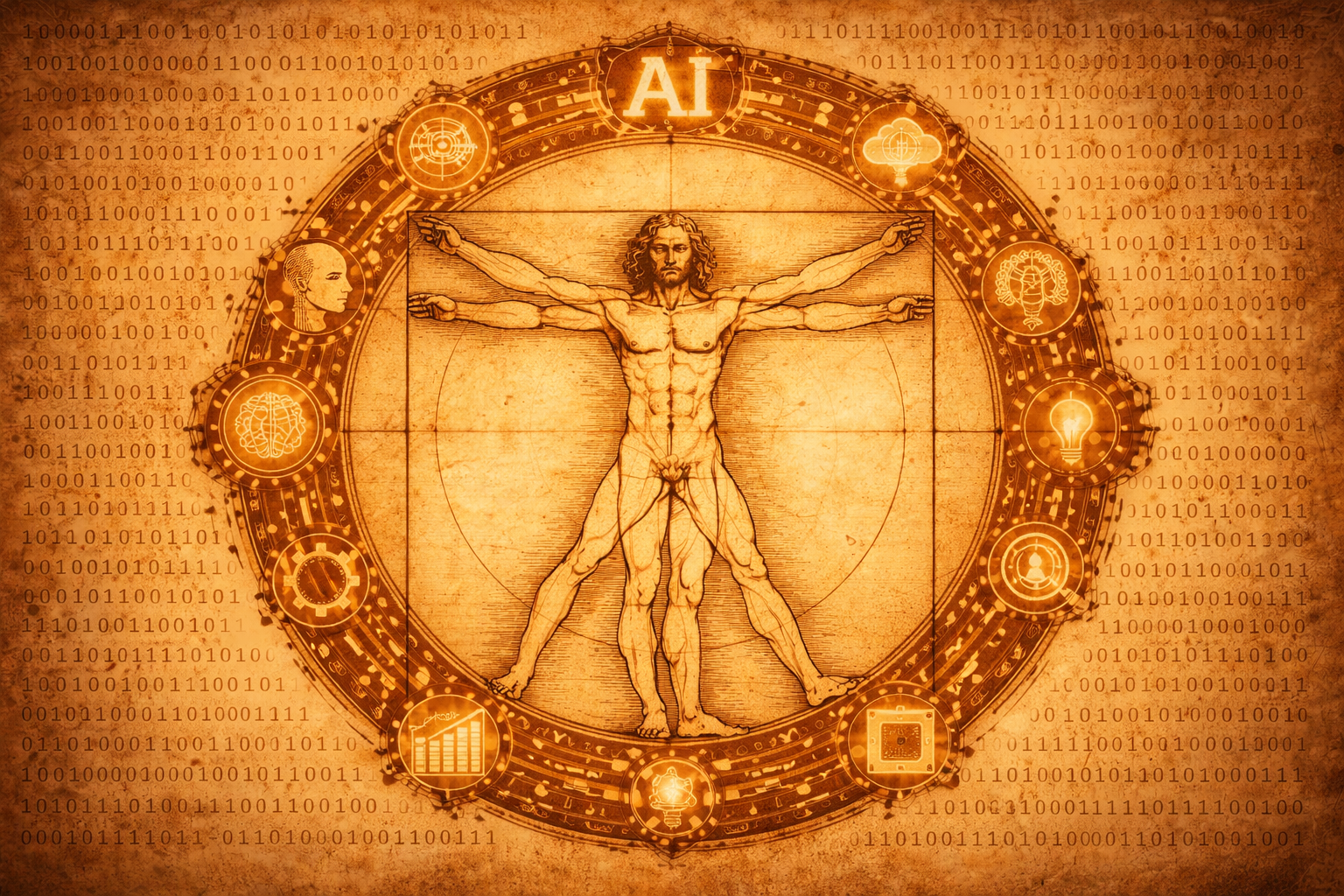
As AI systems become more capable, attention naturally shifts toward output: what can be automated, how fast execution can scale, which roles might disappear. But the better AI gets at producing results, the more decisive human value becomes. Goals, direction, judgment, and responsibility are what give all that output meaning. Without them, it’s just noise.
AI didn’t just automate work. It exposed something more uncomfortable: that much of what we used to measure was a proxy, not the point. Execution used to be scarce, so we optimized for it. Now it’s abundant. What remains scarce is the ability to decide what should be done, why it matters, and what trade-offs are worth making.
Models can generate options endlessly. They can draft strategies, simulate outcomes, summarize context, and execute instructions at a scale no human ever could. What they cannot (yet) do is decide what actually matters, absorb the consequences of those decisions, or carry responsibility across time. They don’t experience outcomes. They don’t adjust their thinking based on lived consequences. They don’t care whether something works in the real world.
As execution becomes cheap, meaning becomes fragile.
In an AI-heavy environment, the human role shifts away from producing output and toward shaping direction. The work that remains fundamentally human is not typing, drafting, or even analysis. It is defining intent, framing problems, setting constraints, and deciding where to stop. AI expands the space of possibilities; humans have to turn that space into something coherent and purposeful.
That act of reduction is not mechanical. It requires judgment, context, and taste. It requires the ability to hold multiple perspectives, weigh long-term effects, and commit despite uncertainty. These qualities don’t emerge from more data or better prompts. They develop over time, through decisions that have consequences.
This is why better AI doesn’t simplify organizations. It puts pressure on them.
Without clear direction, AI amplifies ambiguity. Without decision-making discipline, it multiplies options instead of progress. Output increases, but alignment weakens. What looks like speed often turns into drift, not because the tools are insufficient, but because intent is unclear.
AI doesn’t eliminate the need for human judgment. It makes the absence of it painfully visible.
In a world where ideas are cheap and execution is fast, the differentiator is no longer how much you produce, but how well you decide. Who sets the direction. Who maintains coherence over time. Who is willing to make trade-offs explicit instead of hiding behind endless iteration.
This perspective shapes how we think about building systems at Ryde. We use AI to expand what’s possible, not to outsource thinking. We automate execution so that human judgment has room to operate. We design for clarity over activity, and for direction over motion.
The goal is not to compete with AI on output. It’s to build systems where human intent, responsibility, and thought actually matter.
As AI continues to expand, human value doesn’t disappear. It becomes the constraint.